
Picture this. It is 9pm on a Friday, you are double parked outside a burger joint with the hazards blinking, two phones buzzing on the dash, and a bag of cooling tacos riding shotgun. Somewhere between the restaurant and the customer, the driver ahead of you slams on the brakes. Nothing happens tonight. But the what if follows you all the way home. If you deliver for DoorDash or Uber Eats, the coverage question is not academic. It is the difference between a bad night and a financial hole.
So which platform protects drivers better in 2026? Uber Eats, by a nose. Both apps give you the same limited contingent liability while you are waiting for an order, around $50,000 per person, $100,000 per accident, and $25,000 for property damage, and both step up to as much as $1 million in third-party liability once a delivery is active. The split comes with your own car. Uber Eats offers contingent collision and comprehensive coverage during active deliveries, with a $2,500 deductible, if you already carry those coverages on your personal policy. DoorDash offers nothing to repair your own vehicle. And neither app’s auto policy covers your own injuries. Either way, both apps assume you carry a personal policy with a delivery or rideshare endorsement, and that is the piece most drivers are quietly missing.
Video: Doing DoorDash or Uber Eats? Check Your Car Insurance FIRST
Waiting for an order
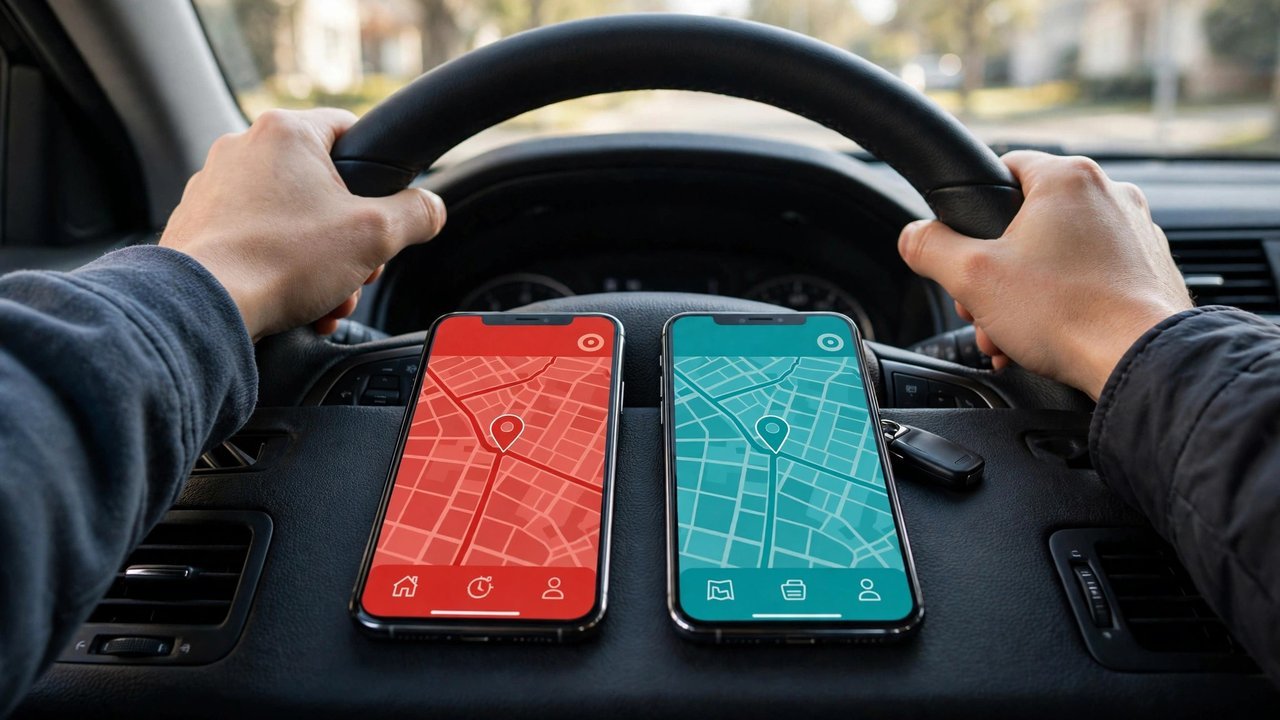
The thinnest coverage either app gives you is the stretch when the app is on and you are staring at the map, waiting for a ping. Both DoorDash and Uber Eats treat this window the same way: limited contingent liability of roughly $50,000 per person for injuries, $100,000 total per accident, and $25,000 for property damage. That is better than nothing, which is exactly what it can feel like.
Contingent is the word doing the heavy lifting here. It means your personal auto policy is supposed to respond first, and the platform’s coverage fills in where yours does not. In practice, your personal policy almost certainly excludes delivery work, so the platform’s contingent coverage is usually what ends up answering. But it only answers for other people. Say you rear-end someone at a red light while waiting for an order. The other driver’s bumper and their urgent care visit can fall under that 50/100/25 umbrella. Your own crumpled hood, your own sore neck, and your own tow bill do not.
It is also worth knowing these are baseline figures, not universal ones. A few states set higher minimums for this waiting period, and the exact limits on your account follow state law where you drive. Neither app gives you collision help for your own car during this phase, and neither gives you a dime for your own medical bills through the auto policy. Call it the coverage gap with the nicest name: everyone talks about the million dollars, but this waiting window is where most drivers spend most of their shift.
Once you accept the order
Things get serious the moment you tap accept. From the drive to the restaurant through the drop-off at the customer’s door, both DoorDash and Uber Eats raise their coverage to as much as $1 million in third-party liability. That covers bodily injury and property damage you cause to other people while you are at fault on an active delivery. DoorDash spells this out plainly on DoorDash’s official insurance page, and Uber maintains the same $1 million structure for deliveries through its official delivery driver insurance page.
Do not let the big number go to your head, though. Third-party liability is money paid to other people, not to you. It pays the minivan you clipped, not your sedan. It pays the other driver’s hospital bill, not yours. The million dollars exists largely because state transportation network laws require platforms to carry it. It is a shield for the public, which is a good thing, but it was never designed to make you whole after a crash.
One more detail drivers miss: the coverage follows the order, not the app you like best. If you accept on DoorDash, DoorDash’s active delivery coverage is what governs until that order is delivered, unassigned, or canceled. The same goes for Uber Eats. Which matters a lot more than most people think once you start running both apps, as we will get to shortly.
What about your own car
Here is where the two platforms finally diverge, and it is the whole ballgame for your wallet.
DoorDash gives you nothing for your own vehicle. The company’s own help center states it directly: damage to a dasher’s vehicle is the dasher’s responsibility and should be addressed through their own auto insurance. You can read the exact terms in DoorDash’s help center. If a DoorDash run ends with a smashed fender, the app’s policy will help the other driver, and your repair bill is entirely yours. For a fuller picture of what happens in that scenario, see our guide to DoorDash accident coverage.
Uber Eats does something DoorDash does not. During an active delivery, it offers contingent collision and comprehensive coverage for your own car, but there are two strings attached. First, you must already carry collision and comprehensive on your personal auto policy. No personal comp and collision, no contingent coverage from Uber Eats. Second, the deductible is $2,500, which is steep compared to the few hundred dollars most people carry on a personal policy. Our breakdown of Uber Eats car coverage walks through how this plays out claim by claim.
Run the math on a typical fender bender with a $4,000 repair bill. As an Uber Eats driver on an active delivery, you pay the first $2,500 and the contingent coverage can handle the remaining $1,500, up to your car’s actual cash value. As a DoorDash driver, you pay the full $4,000. Neither outcome is fun, but only one of them leaves you choosing between the repair and the rent. If you drive a financed car, a newer car, or simply a car you cannot afford to replace, this single difference is the strongest argument for favoring Uber Eats, or at least for knowing exactly what you are signing up for with DoorDash.
And remember the waiting period caveat: Uber Eats’ contingent collision does not apply while you are just sitting online waiting for a ping. It switches on with the accepted order. Get hit in a parking lot while waiting, and even Uber Eats leaves your car out in the cold.
If you get hurt
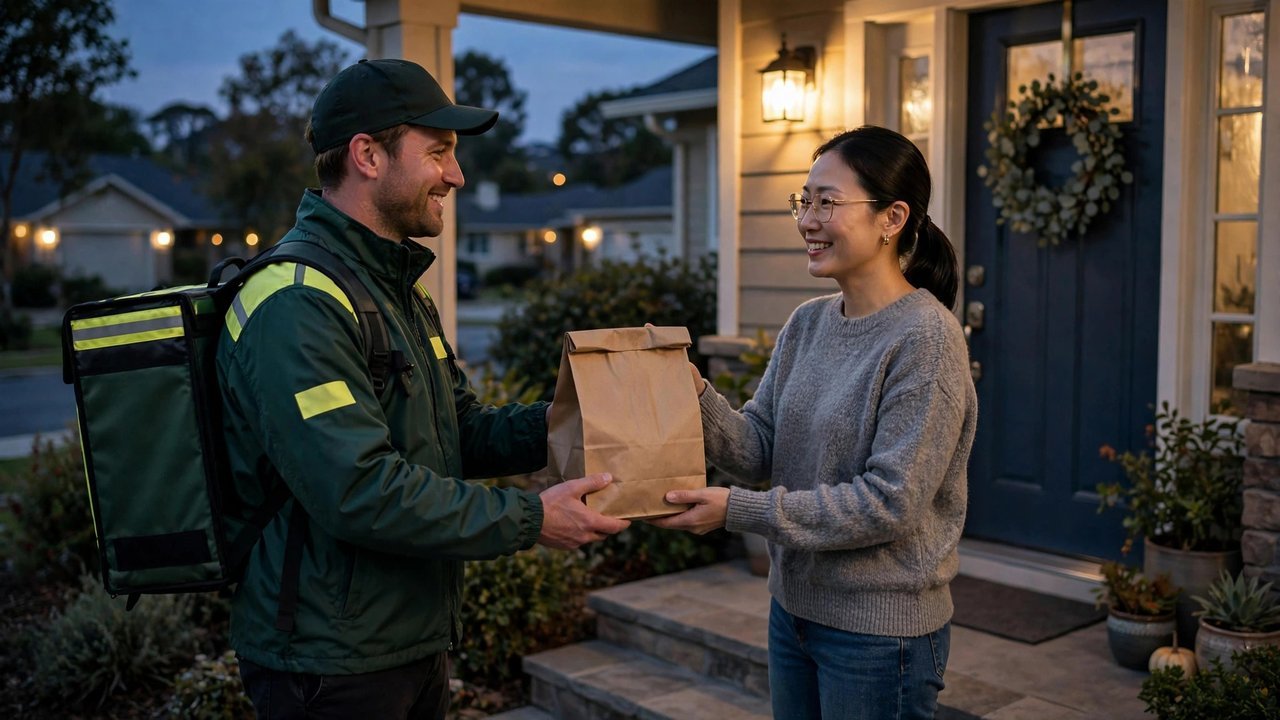
This is the part nobody likes to talk about. Neither app’s auto policy covers your own injuries. The million dollars, the 50/100/25, all of it flows to other people. Your medical bills after a delivery crash fall to your health insurance, and to whatever personal injury protection or medical payments coverage your state requires or your personal policy includes. If you are a young, healthy driver skipping health insurance to save money, a delivery crash is a brutal way to learn what that gamble costs.
DoorDash does offer one genuine extra here. Every US dasher is automatically covered by occupational accident insurance, with no enrollment, no premium, and no deductible. It can pay medical expenses up to $1 million and disability payments of half your average weekly earnings, up to $500 a week, if a covered accident knocks you off the road. That is not auto insurance, it does nothing for your car, and it only applies while you are on a DoorDash delivery, but as injury safety nets go, free is a hard price to beat.
Uber Eats drivers in many states can buy optional injury protection as an add-on, which functions similarly, covering medical costs and some lost income after an on-the-job injury. The price and availability vary by state, so check what is offered where you drive rather than assuming you have it. Either way, treat injury coverage as a separate shopping trip from auto coverage. The apps bundle the topics on one help page, but your body and your bumper are insured by completely different products.
Running both apps at once
Let us be honest: plenty of drivers run DoorDash and Uber Eats at the same time. Two apps, two sets of pings, better odds of staying busy on a slow Tuesday. Insurance-wise, multi-apping is manageable as long as you understand one rule. Coverage follows the active order.
Picture the two phones buzzing again. Both apps are on, no orders yet, and you are in that thin 50/100/25 waiting window on both. Then an Uber Eats order comes in and you accept it. From that tap until the food is delivered, Uber Eats’ active delivery coverage is the one in force, including that contingent collision coverage for your own car. DoorDash is just background noise during that run. Flip it around and the reverse is true.
The messy version is accepting orders on both apps at once, which some drivers do when pings stack up. Now you have two active deliveries and two insurers who will each argue the other one is primary. Do not put yourself in that spot. A cleaner habit: multi-app while you are waiting, then commit to one order at a time. And keep timestamps. Screenshots of your accepted orders with times are the cheapest legal protection you will ever buy, because app status at the moment of impact decides which policy answers.
Your personal policy has to keep up with this lifestyle too. A delivery or rideshare endorsement should cover delivery work generally, not just one platform by name. If your endorsement only names rideshare driving and you are doing food delivery, you may have bought a very expensive misunderstanding. Read our guide to running one policy for both Uber and DoorDash before you assume you are covered.
The coverage neither app gives you
Everything above describes what the platforms provide. Now for what they assume you already have and most drivers do not: a personal auto policy that actually allows delivery work.
A standard personal auto policy excludes commercial use, and delivery driving counts. The moment you log into either app, your personal insurer can deny a claim tied to that driving. The fix is a delivery or rideshare endorsement added to your own policy, a small add-on that usually costs somewhere in the tens of dollars a month and extends your personal coverages through the waiting period and the transitions between app on and app off. A delivery endorsement on your own policy is the cheapest real protection a gig driver can buy.
This is also where honesty pays compound interest. If you do not tell your insurer you deliver and they find out after a crash, which they will, because adjusters check app records, they can deny the claim, cancel the policy, or both. A denied claim on your record then follows you to every future quote. Telling your insurer you dash costs a little each month. Not telling them can cost you the entire claim when you need it most.
One caution: not every insurer offers a delivery endorsement, and a few will simply non-renew you for gig work. That is not a reason to hide it. It is a reason to shop. Several major carriers now compete for delivery drivers, and the endorsement market is far friendlier than it was a few years ago. Both DoorDash and Uber require you to maintain your own primary auto insurance at state minimums anyway, so you are buying the policy regardless. The endorsement just makes it an honest one.
Frequently asked questions
Does DoorDash cover damage to my car?
No. DoorDash provides third-party liability coverage on active deliveries, which pays for injuries and damage you cause to other people, but it offers no collision or comprehensive coverage for the dasher’s own vehicle. Repairs to your car are your responsibility, through your own insurance if it covers delivery work.
Does Uber Eats cover my car if I crash?
During an active delivery, yes, with conditions. Uber Eats offers contingent collision and comprehensive coverage for your car, but only if you already carry those coverages on your personal policy, and only after a $2,500 deductible. It does not apply while you are waiting for an order with no delivery accepted.
What if I am waiting for an order and someone hits me?
Both apps provide limited contingent liability of about $50,000 per person, $100,000 per accident, and $25,000 for property damage in that window, which covers the other party if you are at fault. If the other driver caused the crash, their insurance is what pays for your car and injuries. Either way, the platform will not repair your vehicle while you are waiting.
Can I deliver for both DoorDash and Uber Eats?
Yes, and many drivers do. Insurance coverage follows whichever app holds the active order, so an accepted Uber Eats delivery is covered by Uber Eats even if your DoorDash app is also on. Avoid accepting orders on both apps simultaneously, keep timestamped screenshots of your orders, and make sure your personal endorsement covers delivery work on any platform.
Will my personal car insurance cover me while delivering?
Almost certainly not without an add-on. Standard personal auto policies exclude commercial and delivery use, so a crash while the app is on can be denied. A delivery or rideshare endorsement on your personal policy closes that gap and is the single most important coverage a delivery driver can buy.
What happens if I do not tell my insurer I deliver?
You risk a denied claim, a canceled policy, or both. Insurers routinely check app and phone records after a crash, and a business use exclusion gives them clear grounds to refuse payment. Non-disclosure can also make future coverage far more expensive once a denial or cancellation lands on your record.
The bottom line
Stack them side by side and the verdict is clear but narrow. Uber Eats wins on protection for your own car thanks to contingent collision and comprehensive during active deliveries, even with that chunky $2,500 deductible. DoorDash matches Uber Eats on liability at every stage and counters with free occupational accident coverage for injured dashers. Both leave you equally exposed while waiting for a ping, and both assume you have sorted out your own personal policy.
So here is the driver checklist that actually matters. First, add a delivery or rideshare endorsement to your personal policy and tell your insurer the truth about what you do. Second, keep collision and comprehensive on your personal policy if your car is worth protecting, because that is the key that unlocks Uber Eats’ contingent coverage. Third, know which app holds your active order at all times, and screenshot it. The platforms cover a lot, but the fine print was written for them, not for you. Read it before the night you need it.