

It is a Friday night and you have just picked up a chatty couple at the airport. Their bags are in the trunk, the destination is punched into the app, and the small talk is already rolling. In that moment, with riders buckled in and the trip underway, you are in Period 3. Put simply, Period 3 is the phase when your passenger is in the car and the trip is underway, and it lasts until you drop them off. It is also the moment when Uber and Lyft insurance is at its strongest: up to $1 million in third party liability coverage, uninsured and underinsured motorist protection, plus contingent collision and comprehensive coverage for your own car with a $2,500 deductible. This guide walks through exactly what that coverage does, what it does not do, and where the fine print hides.
Video: Rideshare $1M Insurance: Period 3 vs Period 1 Explained
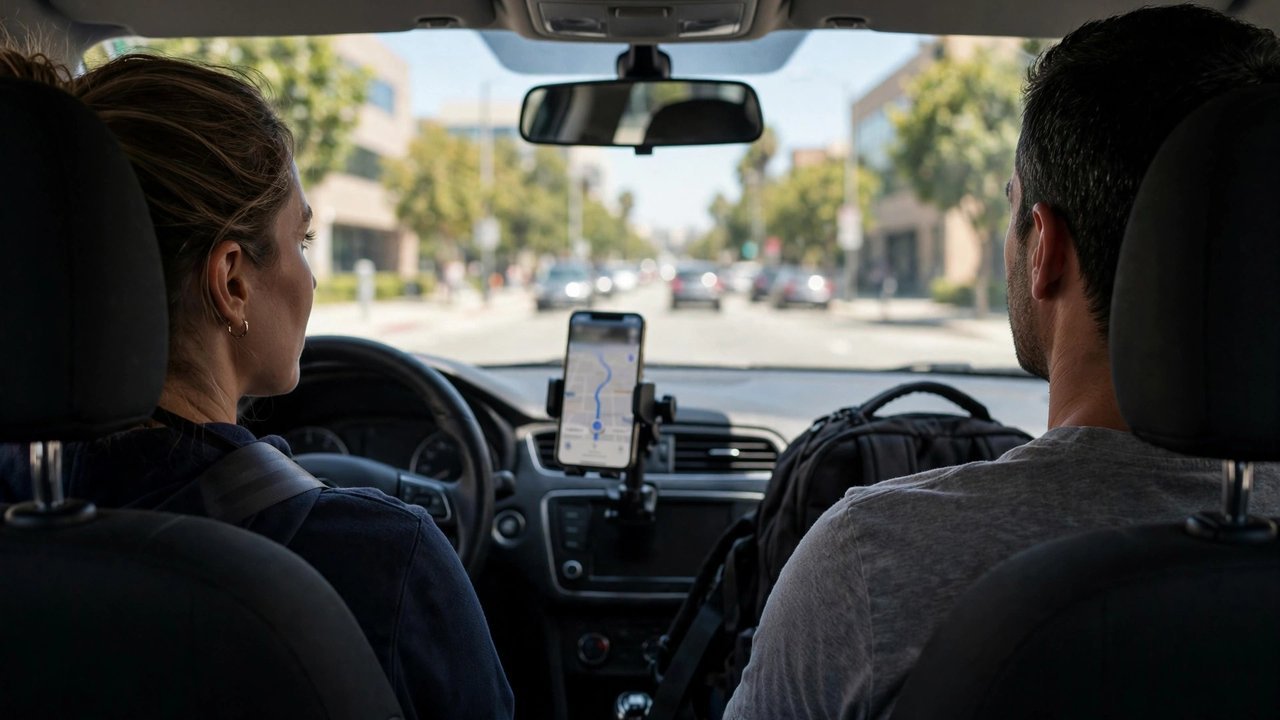
When does Period 3 actually start?
Period 3 begins the moment your passenger gets into your car and the trip starts in the app. Those two things usually happen within seconds of each other, and both matter. The trip status in the app is what the insurance companies look at first, so that tap of the start trip button is doing more than telling the passenger you are on your way.
Why does the exact start matter so much? Because the money on the table changes completely between one period and the next. In the minute before your rider slides into the back seat, you are still in Period 2, which is you driving to the pickup. Both periods carry the big $1 million policy, so the stakes feel similar, but the line is still legally important. What you never want is a crash that happens with the passenger standing next to your car and the trip not yet started. Adjusters love gray areas, and that is exactly the kind of gray area that gets argued over.
So the practical habit is a simple one. Confirm the rider, start the trip, and then roll. That sequence protects you. It also protects your passenger, because their coverage under the platforms policy is tied to the trip being active. If you want the full tour of how each phase works, our breakdown of the Period 1 explained page shows just how thin the coverage gets when no trip is active yet.
When does Period 3 end?
Period 3 ends the moment you complete the drop off and end the trip in the app. Wheels stop, passenger hops out with their coffee, you tap the complete trip button, and you are back in Period 1, the waiting phase where coverage drops sharply. That transition is automatic and instant. There is no grace period and no lingering protection from the million dollar policy once the trip is over.
This is why the app matters more than the real world. If you drop a passenger at their door but forget to end the trip, the app may still show you in an active ride, and that mismatch can complicate a claim. On the flip side, if the trip is ended in the app but your passenger is still gathering their things from the trunk, the policy has technically already stepped down. For everyday driving this is a non issue, but in a crash those details become the whole argument. End the trip promptly at the drop off, every time, and your record will match reality.
The drop off transition is also worth keeping in mind for multi stop rides. If your passenger adds a stop mid trip, you are still in Period 3 the entire time, because the trip never ended. The million dollar coverage stays with you from the first pickup to the final good night.
What is covered during Period 3
Here is the full lineup of what Uber and Lyft put on the table while a passenger is in your car. Think of it as three separate promises stacked on top of each other.
The million dollar liability policy
The headline coverage in Period 3 is up to $1 million in third party auto liability. That means if you cause a crash while your passenger is in the car, the platforms policy can pay up to $1 million for injuries to other people and damage to other peoples property. This is real commercial grade insurance, the kind that covers hospital bills, lost wages, and legal claims from the people you hit.
For drivers, this is the biggest reason Period 3 feels safe. Your own personal auto policy almost certainly excludes commercial driving, which means without the platforms policy you could be personally on the hook after an at fault crash with a passenger on board. The $1 million policy stands between you and that nightmare. One caveat: liability coverage protects other people, not you. We will get to your own injuries in a moment, because that is where drivers get the rudest surprise.
Protection when the other driver has no insurance
Both companies also provide uninsured and underinsured motorist coverage during Period 3. This is the coverage that steps in when somebody else causes the crash but has little or no insurance of their own. If a driver with the state minimum rear ends your car at a red light while you have two passengers on board, and your passengers medical bills blow past that drivers tiny policy, the UM and UIM coverage on the platforms policy can make up the difference.
This matters more than most drivers realize. Plenty of cars on the road carry bare minimum limits, and some carry no insurance at all. Without UM and UIM, your passengers could be left fighting the at fault drivers insurer for scraps. With it, there is a real policy ready to respond. Lyft publishes the details of these first party coverages on its insurance page for drivers, and it is worth a read so you know exactly what your market includes, since some states layer in PIP or MedPay on top.
Coverage for your own car, with strings attached
The third piece is contingent collision and comprehensive coverage for your own vehicle, up to its actual cash value, with a $2,500 deductible on both Uber and Lyft. In plain English, if your car is damaged in a crash during Period 3, the platforms policy can pay to fix or replace it, minus $2,500 out of your pocket. If the damage is $8,000, you get $5,500 from the policy and eat the rest.
Now the strings. First, this coverage is contingent, meaning it only exists if you already carry collision and comprehensive on your own personal auto policy. No personal comp and collision, no platform comp and collision. Second, that $2,500 deductible is much steeper than the $500 or $1,000 deductible most drivers carry personally, so a minor fender bender might fall entirely on you. Our deep dive on the Uber $2,500 deductible walks through the math on when this coverage actually helps and when you are better off handling small damage yourself.
What does contingent really mean?
Insurance people love the word contingent, and it confuses almost everyone the first time. Here is the plain version. A contingent policy is a backup policy. It sits behind your personal auto policy and only pays when your personal policy cannot or will not.
During Period 3, the platforms $1 million liability coverage is primary, not contingent. It responds first, ahead of your personal policy. That is good news and it is why Period 3 is the safest phase to drive in. But the collision and comprehensive coverage for your own car is contingent. It pays only if your personal policy applies first or would apply but for the rideshare exclusion, and only if you actually carry that coverage yourself. Your personal insurer will still usually deny the claim because you were driving commercially, and that denial is exactly what triggers the contingent coverage to step forward.
Think of it like a relay race. Your personal policy is supposed to run the first leg, trips on the commercial use exclusion, and hands the baton to the platforms policy. The race still finishes, but you need to understand the handoff, because in a claim you may have to file with your own insurer first, get the denial in writing, and then bring that denial to the platforms insurer. Keep every letter and email. Paper trails win claims.
If you caused the crash
Let us talk about the scenario nobody wants to imagine. You are at fault. Maybe you glanced at the navigation at the wrong second, maybe you misjudged a yellow light. Here is how the coverage responds, person by person and car by car.
Your passengers are covered. The $1 million third party liability policy pays for their injuries, and as a passenger they can file a claim directly against the platforms policy. Other drivers and pedestrians you hit are covered too, up to the same $1 million. This is the policy doing exactly what it was designed to do: protecting the public from the consequences of a commercial trip.
Your own injuries are not covered by the liability policy. This is the rude surprise. Liability insurance, by definition, pays other people. It never pays the person who caused the crash. If you are hurt in an accident you caused during Period 3, neither Uber nor Lyft liability coverage pays your medical bills. Your health insurance, your personal injury protection if your state requires it, or your own MedPay coverage would have to pick that up. Many drivers do not realize this until they are sitting in an emergency room, so knowing it now is genuinely valuable.
Your car gets the contingent treatment described above. If you carry collision on your personal policy, the platforms contingent collision coverage can repair your car up to its cash value, minus the $2,500 deductible. If you only carry liability on your personal policy, there is no contingent coverage at all, and your car repairs come out of your pocket. A full breakdown of who pays after an Uber accident covers the claim filing order in more detail.
If the other driver caused the crash
Now flip it around. You are driving carefully, passenger in the back, and someone runs a red light and smashes into you. Life is simpler here, but there is still an order of operations.
First in line is the at fault drivers insurance. Their liability policy should pay for your passengers injuries, your injuries, and your car. But what if they carry the state minimum, or no insurance at all? That is when the platforms uninsured and underinsured motorist coverage activates. It fills the gap between what the at fault driver can pay and what the injuries actually cost, which protects both you and your passengers.
Here is a subtle point drivers miss. In this scenario, your own injuries can be covered, because the UM and UIM coverage is first party coverage. It is designed to protect the people in your car when someone else is at fault and underinsured. The liability policy still does not pay you, but the UM and UIM coverage can. So the same crash can leave you covered or exposed depending entirely on whose fault it was, which is why fault determination matters so much in rideshare claims.
What about your passengers?
Passengers ride with more protection than they probably know. From the moment the trip starts until the drop off, they sit under the platforms $1 million liability umbrella and the UM and UIM coverage. If the rideshare driver causes the crash, the passengers claim goes against the platforms liability policy. If another driver causes it, the claim can go against that drivers policy first, with the platforms UM and UIM coverage as the backstop.
Passengers also have practical rights worth knowing. They can request the trip details and the insurance information for the active policy, they can file a claim directly with the platforms insurer rather than going through the driver, and they should always get a police report and medical documentation, even for injuries that feel minor at the scene. Soft tissue injuries have a habit of announcing themselves the next morning.
One more thing for drivers to keep in mind. Your passenger is also a witness with a phone. In a disputed claim, the trip record, the GPS data, and the passengers account of events all become evidence. Drive like the back seat is keeping score, because in a sense, it is.
Period 3 versus Periods 1 and 2
A quick comparison keeps the whole system clear. Period 1 is the waiting phase: app on, no ride accepted. Coverage there is thin, just contingent liability at much lower limits, and it only pays if your personal policy does not. This is the famous coverage gap, and our guide to the Period 1, 2, and 3 gaps explains why so many drivers get hurt right here.
Period 2 is the en route phase: ride accepted, driving to the pickup. Coverage jumps to the full commercial level, the same $1 million liability, UM and UIM, and contingent comp and collision that you get in Period 3. In practice, Periods 2 and 3 are twins. The platforms treat the entire stretch from acceptance to drop off as one protected window.
Period 3 is the trip itself: passenger in the car, destination ahead. Same strong coverage as Period 2, and this is the phase where the passenger themselves is under the policy. The pattern to remember is simple. No passenger and no accepted ride means thin coverage. Accepted ride or passenger on board means the million dollar policy is awake. The Insurance Information Institute has a helpful ridesharing and insurance question and answer page that lays out the same period structure from an industry perspective.

Questions drivers ask about Period 3
Does Period 3 cover me if my app glitches mid trip?
Usually yes, as long as the trip was active when the crash happened. The platforms keep server side trip records, so even if your phone froze or the app crashed, the back end typically shows the ride in progress. Screenshot everything anyway, and report the trip through the app as soon as you can.
Can my personal insurer drop me for a Period 3 claim?
A Period 3 claim goes to the platforms insurer, not your personal one, so the claim itself is not filed on your personal policy. But your personal insurer can still non renew you if they discover you drive for rideshare without telling them, which is a separate issue. Disclose your driving to your insurer and consider a rideshare endorsement to keep your personal policy safe.
What if my passenger was not wearing a seatbelt?
The coverage still applies. Seatbelt use does not switch the policy on or off. It can affect the size of an injury settlement in some states under comparative fault rules, but it does not void the platforms coverage. Still, remind your riders to buckle up. It is good driving and good karma.
Does the $2,500 deductible apply per accident or per year?
Per accident. Every separate crash during Period 2 or 3 that triggers the contingent collision or comprehensive coverage carries its own $2,500 deductible. Two crashes in a year means two deductibles. This is another reason the deductible math matters so much for drivers.
Am I in Period 3 during a scheduled stop?
Yes. If the trip is still active in the app, you are in Period 3, whether you are moving, waiting at a drive through the passenger requested, or parked at a mid trip stop. The period follows the trip status, not the speedometer. It only ends when the trip is completed in the app.
The bottom line
Period 3 is the safest seat in the rideshare insurance house. Passenger in the car, trip active in the app, and a $1 million commercial policy standing behind you, with UM and UIM protection and contingent coverage for your car on top. The two things to burn into memory are the boundaries and the blind spots. The coverage starts when the trip starts and ends when the trip ends, so keep the app honest. And the million dollar policy protects everyone except you when you are at fault, so your own injuries and your own deductible are still your responsibility to plan for. Drive like you know exactly which period you are in, because the insurance company certainly will.